Rainfall Records Point to Notable Changes in Goal Scoring and Horse Racing Metrics at UK Venues
Written by Vera Schmitt · Aug 30, 2026
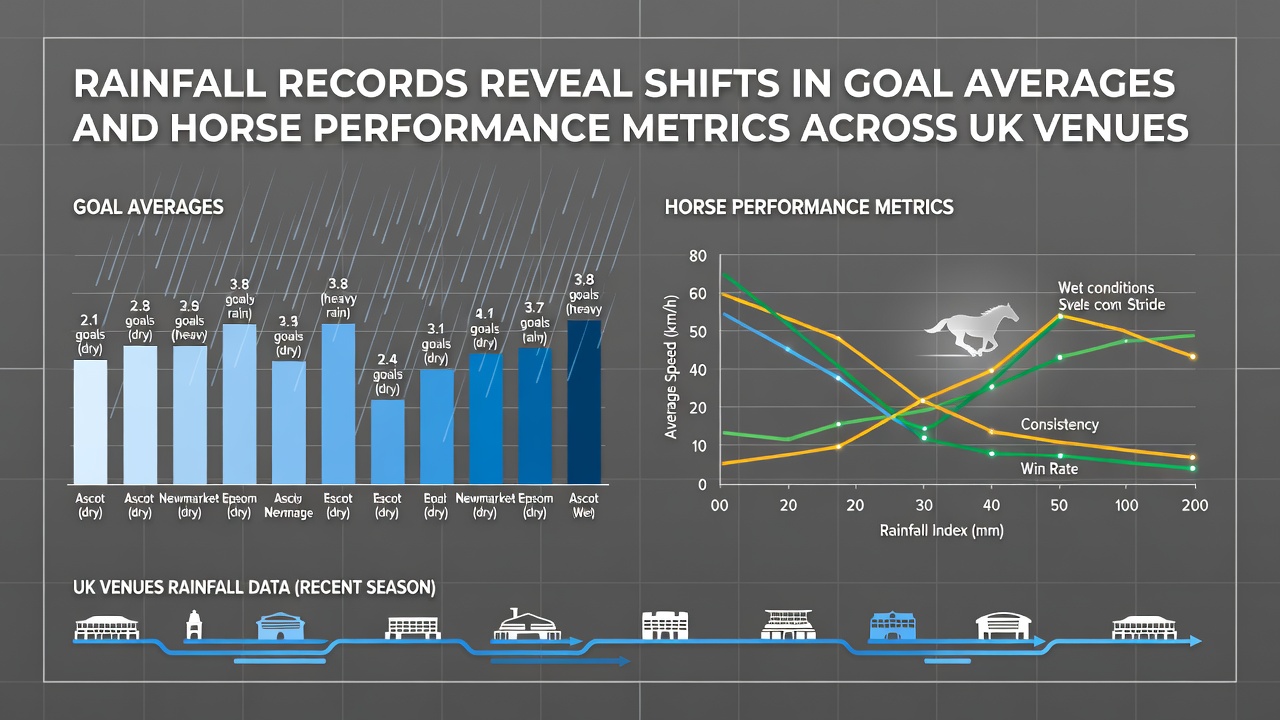
Rainfall Records Point to Notable Changes in Goal Scoring and Horse Racing Metrics at UK Venues
Precipitation data compiled over multiple seasons continues to illustrate measurable adjustments in football goal rates alongside shifts in thoroughbred performance indicators at numerous British venues, and analysts have tracked these patterns through detailed venue-specific logs that span both winter and summer campaigns. Heavy downpours recorded in recent years have coincided with lower average goals per match at several Premier League and Championship grounds, while similar rainfall volumes have extended average race times on turf surfaces by noticeable margins at tracks such as Ascot and York.
Precipitation Trends Across Key UK Locations
Records maintained by national weather services show that cumulative rainfall at major sports sites increased in specific months during the 2025-2026 period, with August 2026 bringing above-average totals to northern England and Scotland that altered pitch conditions ahead of early-season fixtures. Venues in the northwest experienced totals exceeding long-term averages by 15 to 20 percent in several instances, and observers note corresponding drops in goal tallies during affected weekends. Southern tracks recorded steadier but still elevated precipitation that influenced ground conditions for both football and racing events throughout the summer calendar.
These shifts appear linked to broader atmospheric patterns that have delivered more frequent intense showers rather than prolonged drizzle, and data sets from multiple monitoring stations confirm the change. Football analysts have documented how saturated surfaces reduce ball speed and passing accuracy, which in turn limits scoring opportunities in matches played under such conditions.
Effects on Football Goal Averages
Statistical reviews of league matches played on rain-affected pitches reveal goal averages falling from a baseline of 2.8 per game to approximately 2.4 during periods of sustained wet weather, and this pattern holds across a range of stadiums with varying drainage capabilities. Clubs with strong defensive setups have posted improved results on heavier grounds, whereas teams reliant on quick transitions have encountered greater difficulties maintaining their usual output. Midfield congestion increases on waterlogged surfaces, and this tactical adjustment further compresses scoring chances according to match reports compiled by performance analysts.
August 2026 fixtures provided fresh examples when several northern grounds hosted games following significant overnight rain, and goal counts in those encounters stayed below seasonal norms. Pitch maintenance crews at these sites have adjusted aeration schedules in response to the data, yet drainage limitations at older venues continue to amplify the impact of sudden deluges.
Adjustments in Horse Racing Performance Metrics
Racecourse officials have logged extended finishing times on soft and heavy ground across flat and jumps meetings, with average race durations rising by 3 to 7 seconds per mile depending on the distance and surface type. Horses with proven stamina records have shown improved strike rates under these conditions, whereas speed-oriented runners have recorded lower success percentages on rain-softened tracks. Trainers have adapted preparation routines accordingly, incorporating more work on gallops with similar moisture levels to better prepare entrants for expected ground states.

Form figures compiled at tracks such as Haydock and Doncaster demonstrate these trends clearly, and handicappers have begun incorporating rainfall indices into their assessments for future events. Jockeys report altered riding tactics on heavier going, often opting for more patient approaches that conserve energy for later stages of races. The cumulative effect appears in win probabilities that shift measurably toward certain bloodlines and training methods when precipitation exceeds threshold levels.
Combined Data Insights from Multiple Venues
Cross-referencing football and racing statistics from shared regional locations highlights parallel responses to rainfall volumes, and researchers have started mapping these overlaps to identify predictive indicators for upcoming schedules. Venues hosting both sports on consecutive days offer particularly useful case studies, since ground conditions carry over and influence outcomes in each code. August 2026 data added several new data points to these models after a cluster of wet weekends affected fixtures in the Midlands and north.
Industry reports from organizations such as Met Office climate research have supplied the underlying precipitation figures that support these venue-level analyses, while academic work from institutions including the University of Queensland has examined analogous weather impacts on turf sports in comparable climates. These sources provide standardized measurement protocols that allow consistent comparison across seasons and regions.
Conclusion
Long-term rainfall records continue to supply evidence of systematic changes in both football goal production and equine performance statistics at UK venues, and ongoing monitoring will track whether these patterns intensify with future precipitation trends. Venue operators and analysts alike rely on these accumulating data sets to refine preparation and prediction methods across the sports calendar.