Weather Patterns Reshaping Playing Fields in Soccer and Equine Competitions
Written by Avery Schulz · Jun 27, 2026
Weather Patterns Reshaping Playing Fields in Soccer and Equine Competitions
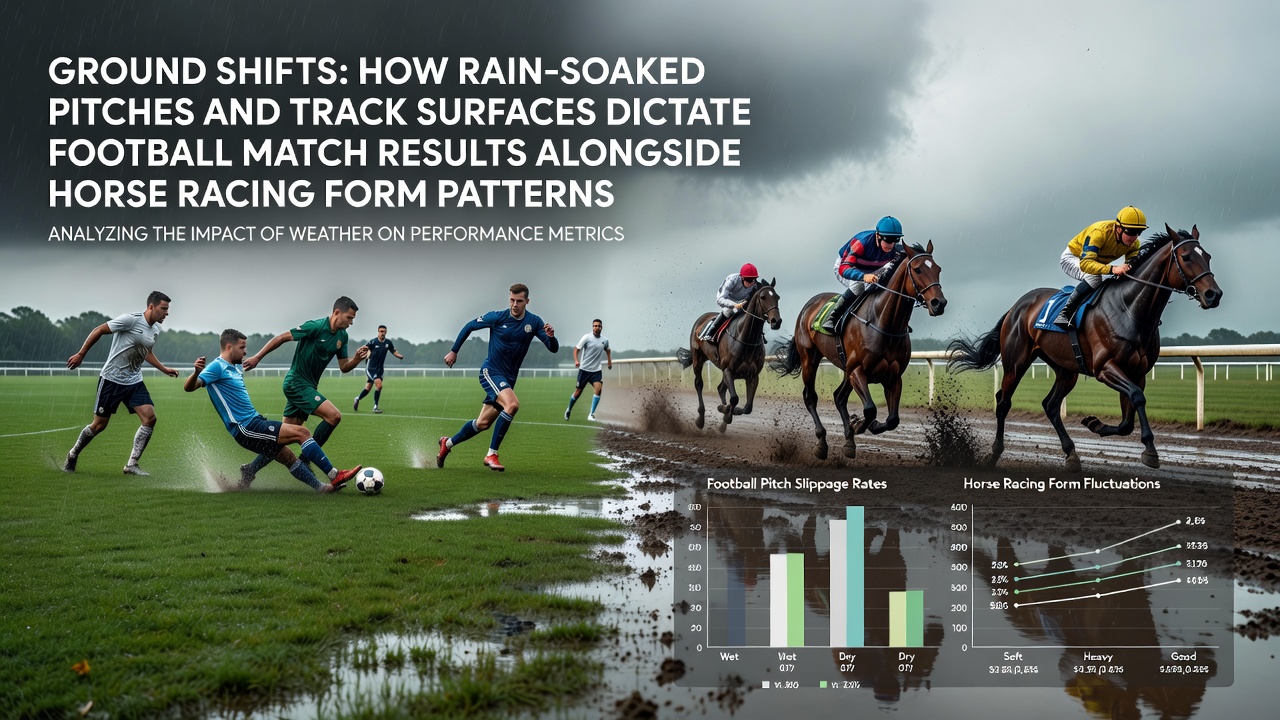
Persistent rainfall alters ground firmness across outdoor venues, which in turn influences player movement, ball behavior, and equine stride efficiency during competitive events. Meteorologists recorded above-average precipitation levels across multiple European regions through spring 2026, with carryover effects noted into early summer fixtures. These shifts modify traction levels on natural grass surfaces, prompting adjustments in team strategies and individual horse selections based on historical performance data under similar conditions.
Football Pitch Responses to Saturated Soils
Heavy downpours compact soil layers beneath pitches, reducing bounce while increasing friction that slows ball roll and favors shorter passing sequences over long-range attempts. League records from teh 2025-2026 season show a measurable uptick in low-scoring draws during periods of sustained wet weather, particularly on venues without advanced drainage systems. Groundskeepers apply sand mixtures and aeration techniques to mitigate water retention, yet residual effects persist for days after storms subside, creating uneven patches that defenders exploit through positioning rather than speed.
Player injury patterns shift as well, since softer turf absorbs impact forces differently and raises slip risks during directional changes. Medical reports compiled by sports science teams at various clubs document higher rates of ankle and knee strains when matches occur on waterlogged fields compared to drier counterparts. Coaches review video archives of prior wet-weather games to identify which forwards maintain balance and control, thereby refining selection criteria ahead of forecasted rain events.
Track Surface Variations in Horse Racing
Equine competitions classify track conditions through standardized terms such as firm, good, yielding, and heavy, each corresponding to moisture content that alters hoof penetration depth and energy expenditure. Data compiled by racing authorities in Australia and North America indicate that certain bloodlines excel on softening ground while others lose several lengths per furlong once surfaces turn heavy. Trainers monitor rainfall forecasts closely, since a sudden deluge can transform a scheduled firm track into one rated soft within hours, reshaping betting odds and race tactics accordingly.
Jockeys adapt riding styles to compensate for reduced grip, holding horses wider on turns to avoid deeper ruts carved by earlier runners. Studies from the University of Melbourne's equine research unit highlight how stride frequency drops measurably on heavy tracks, leading trainers to favor stamina-oriented runners over pure speed types when precipitation exceeds seasonal norms. June 2026 meetings in the southern hemisphere have already demonstrated these patterns, with several favorites underperforming after unexpected overnight rains altered going descriptions.
Integration of Form Data with Ground Conditions
Form analysis incorporates surface-specific metrics rather than raw win totals alone, allowing analysts to isolate performances recorded on comparable going. Statistical models developed by European sports data firms reveal that horses with proven records on soft or heavy tracks maintain higher strike rates during wet periods, whereas those limited to firm-ground victories show diminished returns. Similar layering occurs in football, where midfielders who retain possession effectively on slippery surfaces appear more frequently in lineups once forecasts predict precipitation.
Cross-referencing past results with weather logs produces clearer patterns than isolated statistics. Observers note that teams employing high-pressing styles encounter greater difficulty sustaining intensity once pitches soften, prompting tactical shifts toward compact defensive blocks. In racing, trainers adjust training regimens weeks in advance, incorporating gallops on watered tracks to simulate expected conditions and preserve muscle memory for key engagements.
Documented Examples from Recent Seasons
One midweek fixture in northern England during March 2026 featured persistent showers that turned the pitch into a quagmire, resulting in both sides completing fewer than 300 accurate passes compared to season averages above 450. A comparable scenario unfolded at an Australian racing carnival where a late storm downgraded the track from good to heavy, allowing several long-priced runners with prior wet-track form to finish in the placings. These instances underscore how surface changes override pre-event expectations derived from dry-weather data sets.
Regulatory bodies such as those overseeing Australian thoroughbred racing maintain public databases that tag each runner's record by going description, enabling precise filtering before race day. Parallel resources exist through meteorological services in Canada that supply granular precipitation histories for venue-specific modeling. Such tools assist preparation without guaranteeing outcomes, since variables including wind direction and temperature interact with moisture levels in complex ways.
Conclusion
Ground condition monitoring continues to evolve alongside advances in soil science and real-time weather tracking, providing stakeholders with increasingly granular inputs for decision-making. Both football clubs and racing stables integrate these variables into preparation cycles, recognizing that surface firmness directly modulates physical demands and strategic options. Continued collection of performance data under varied moisture scenarios supports refined predictive frameworks that account for environmental influences rather than form alone.