When Rain Transforms Playing Fields and Race Tracks Alike
Written by Nils Meier · Jun 11, 2026
When Rain Transforms Playing Fields and Race Tracks Alike
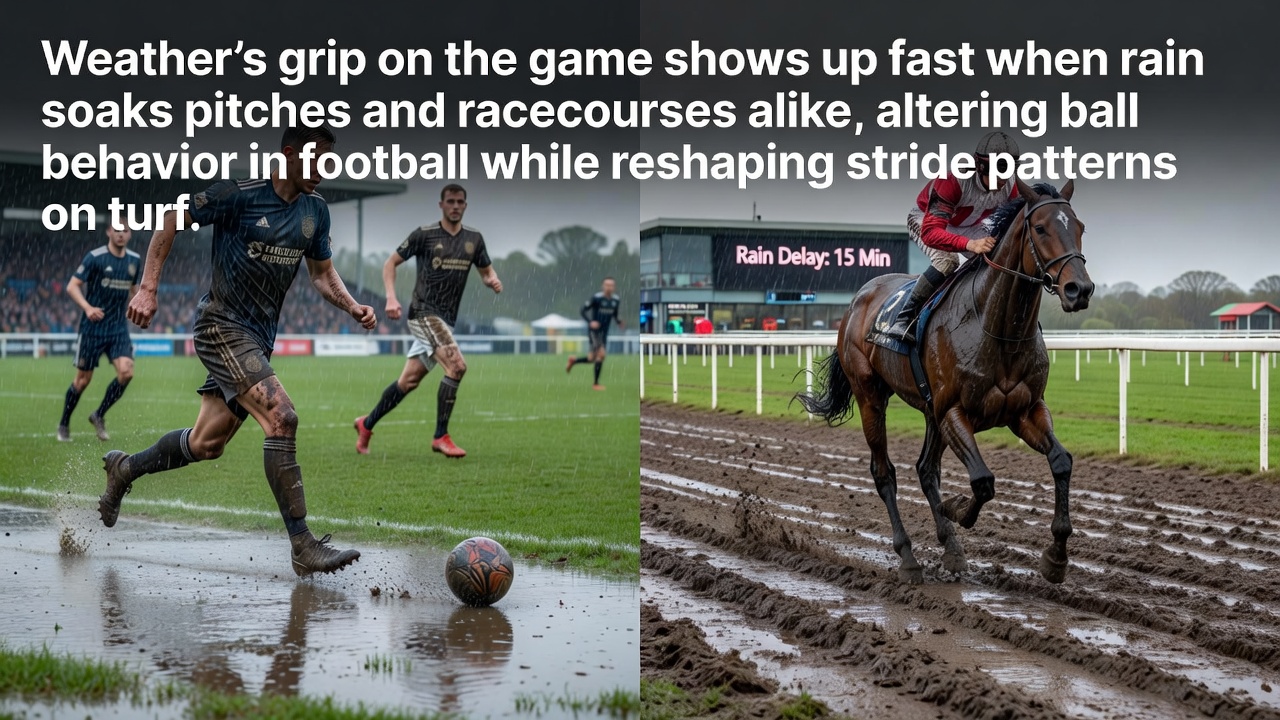
Weather systems move in quickly during the summer months and June 2026 brought repeated showers across multiple regions that host both football matches and horse racing fixtures. Observers note how these downpours reach the ground within hours and immediately change surface conditions on pitches and turf tracks.
Football Pitches Respond to Moisture First
Grass surfaces absorb water rapidly which increases friction between the ball and the turf while reducing bounce height. Players adjust passing angles and shot power because the ball travels slower and stops sooner on saturated ground. Data collected by match analysts during wet periods shows average pass completion rates drop by several percentage points when rainfall exceeds 5 millimetres per hour.
Groundskeepers apply sand and aeration treatments in advance yet prolonged rain overwhelms these measures. Teams that rely on quick one-touch combinations often switch to longer balls and direct play once the surface becomes heavy. Referees monitor pitch playability closely because standing water creates unpredictable skids that raise injury risks for sliding tackles.
Racecourses Face Parallel Changes in Stride Dynamics
At the same time turf tracks at racecourses soften under the same rainfall and horses alter their gait to maintain balance. Stride length shortens while hoof penetration deepens which increases energy expenditure over longer distances. Jockeys report that horses with a high knee action handle the extra give better whereas those built for speed on firm ground lose momentum quickly.
Clerk of the course officials inspect going conditions multiple times before racing begins and issue official updates that classify the surface as good to soft or heavy. These classifications directly influence trainer decisions about which horses to declare. Records from major meetings indicate that favourites win less frequently on heavy ground because pace advantages diminish and stamina becomes the deciding factor.
Shared Patterns Across Both Sports
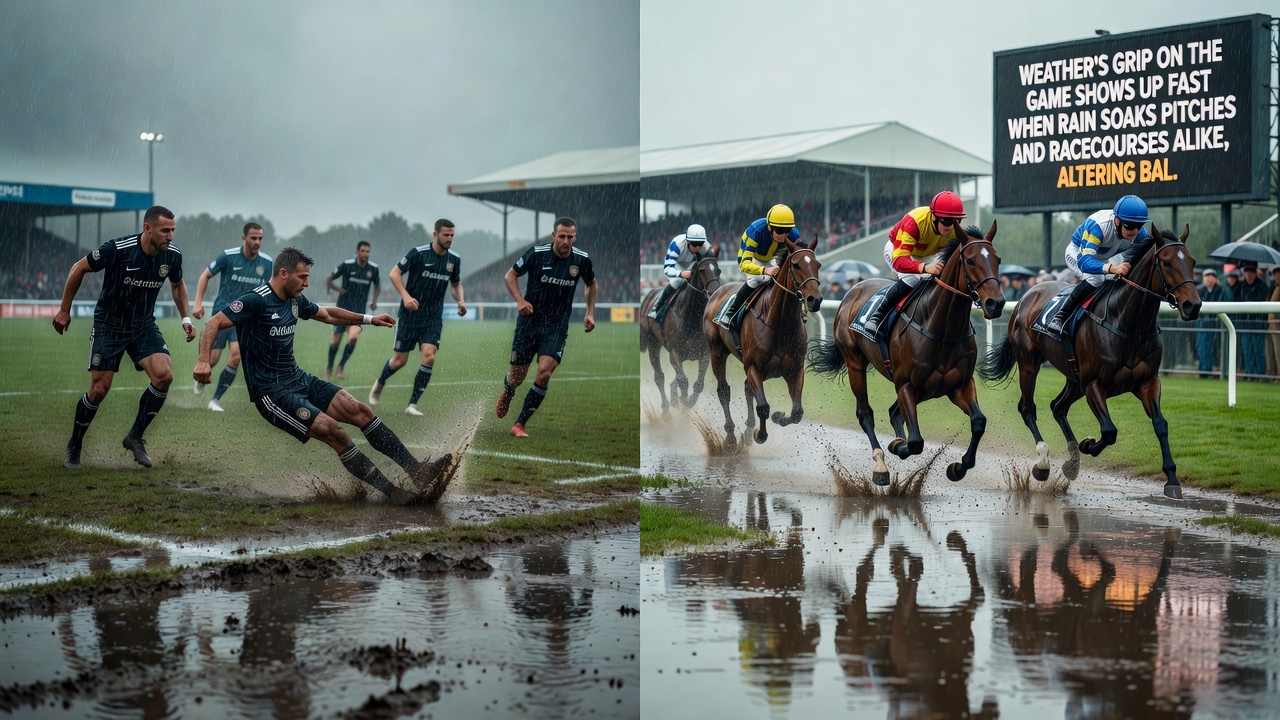
Coaches and trainers monitor the same meteorological forecasts yet apply different preparation strategies. Football squads increase indoor technical drills that emphasise ball control under slippery conditions whereas racing yards focus on hill work and swimming to build the strength needed for soft surfaces. Both groups rely on historical performance data segmented by weather to identify which athletes or horses thrive when conditions turn wet.
Research from sports science departments at several European universities indicates that muscle strain rates rise in wet environments because athletes compensate for reduced traction with altered movement patterns. The same studies highlight that recovery protocols become more important after events held on rain-affected surfaces.
June 2026 Weather Data and Scheduling Adjustments
Meteorological records for June 2026 show above-average rainfall totals in parts of northern Europe and Australia where major football leagues and racing carnivals overlap. Organisers responded by advancing some race meetings and rescheduling kick-off times to avoid peak storm periods. These adjustments demonstrate how governing bodies coordinate with weather services to maintain event safety and fairness.
Equipment suppliers also adapt. Football boot manufacturers promote stud patterns designed for mixed conditions while racing farriers adjust shoeing techniques to improve grip without damaging the turf. Such innovations appear in real time as forecasters release updated precipitation models.
Conclusion
Rain continues to exert immediate influence on both football and horse racing by modifying surface behaviour and forcing participants to adapt tactics and training. Continued collection of performance metrics under varying weather conditions allows analysts to refine predictions and helps officials make informed decisions about event viability. The patterns observed in June 2026 align with longer-term records that link precipitation levels directly to changes in play and race outcomes.