When Skies Turn the Odds: Tracing Precipitation's Role in Reshaping Football Scores and Racing Form
Written by Finley Jenkins · Jun 13, 2026
When Skies Turn the Odds: Tracing Precipitation's Role in Reshaping Football Scores and Racing Form
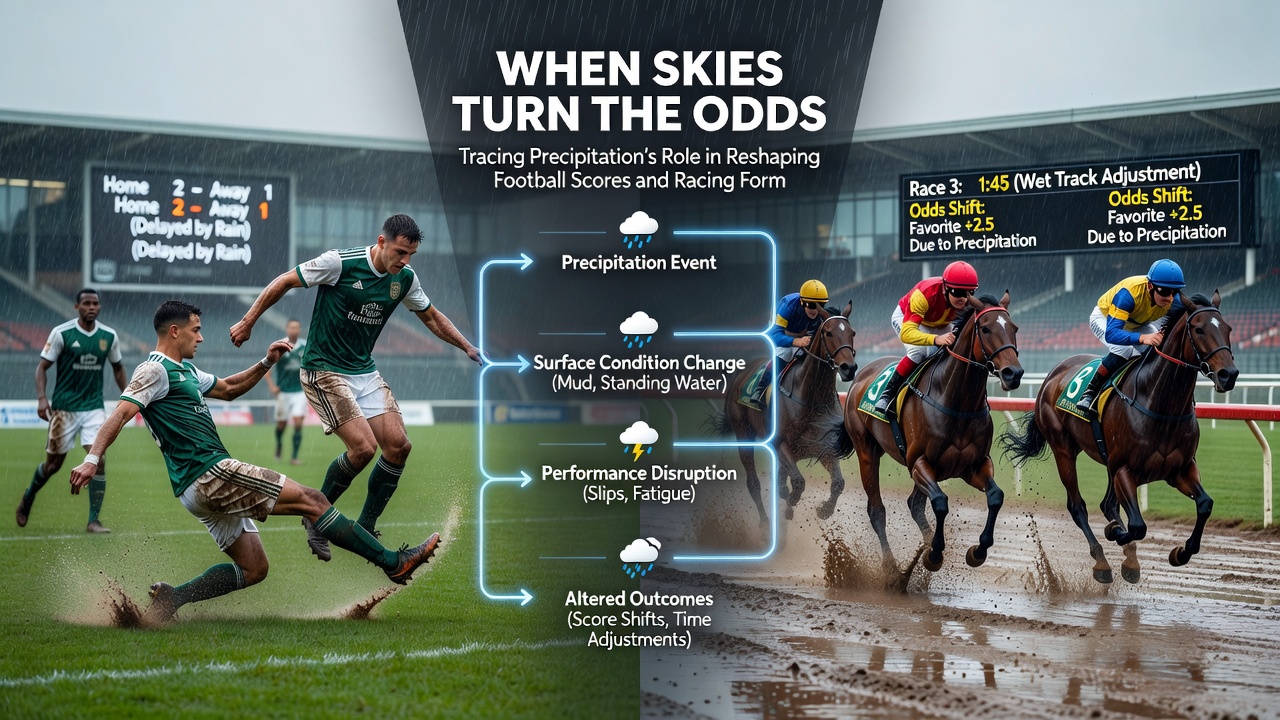
Precipitation alters playing surfaces in ways that shift scoring patterns in football while modifying expected outcomes on racetracks, and researchers continue to document these measurable effects across multiple seasons. Data collected from professional leagues shows consistent changes in goal tallies and race times when rainfall saturates pitches or racing surfaces, and observers note that both sports respond to moisture through distinct mechanical and strategic adjustments.
Football Surfaces and Scoring Dynamics
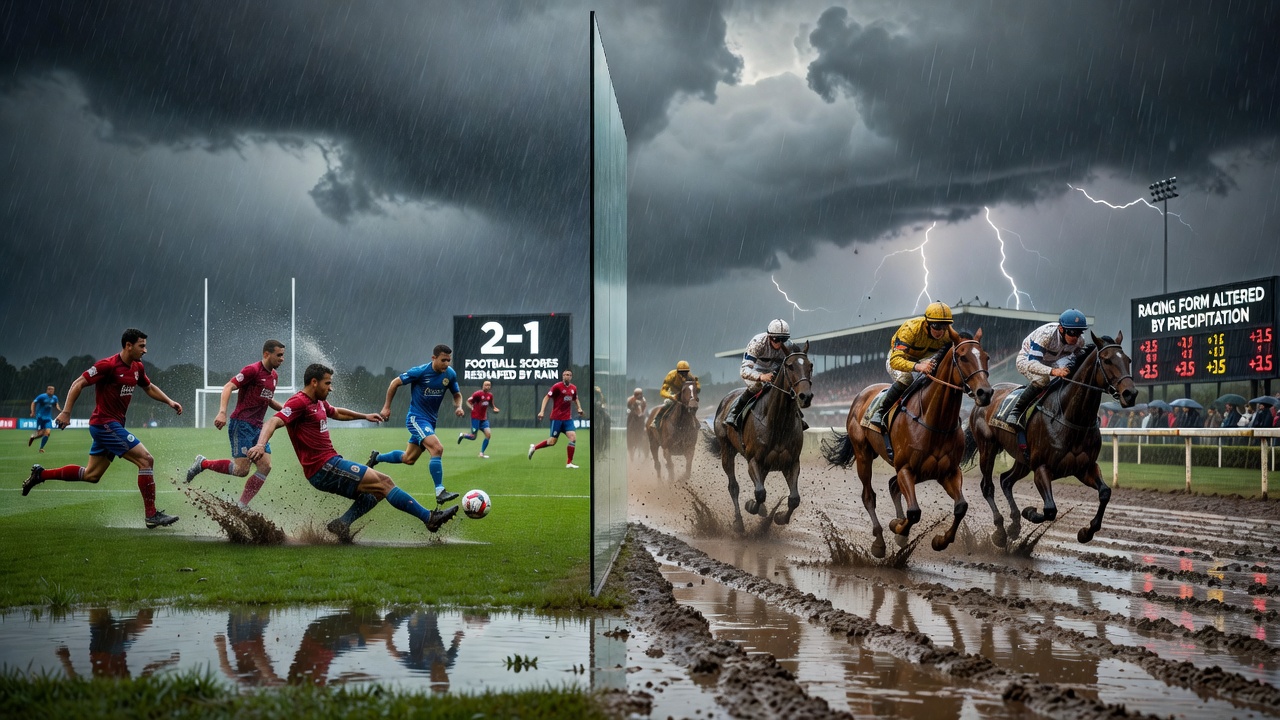
Wet conditions reduce friction on natural grass and artificial turf, which leads teams to record fewer completed passes in the final third and increases turnovers near goal areas. Studies from European leagues indicate that matches played during steady rainfall produce an average of 0.4 fewer goals per game compared with dry conditions, while heavy downpours correlate with even sharper drops in total shots on target. Players adjust by shortening passing ranges and relying more on long balls, and these tactical shifts appear most pronounced after the first half hour once the surface becomes slick.
Groundskeepers report that drainage systems built to modern standards still leave residual water that pools in high-traffic zones, and this pooling creates unpredictable bounces that favor defensive setups over attacking combinations. Historical match logs from the English Premier League between 2018 and 2025 reveal that teams positioned lower in the table often secure draws at higher rates when precipitation exceeds 5 millimeters in the two hours before kickoff. Analysts tracking these patterns emphasize that the effect compounds in stadiums without full roof coverage, where wind-driven rain further reduces visibility for goalkeepers on set pieces.
Horse Racing Track Conditions and Performance Records
Racing authorities classify track surfaces using terms such as firm, good, soft, and heavy, and each designation corresponds to specific moisture thresholds that directly influence stride length and finishing times. When rainfall pushes a course into the soft or heavy range, average winning times lengthen by 3 to 7 seconds over 1600 meters, according to records maintained by major racing jurisdictions. Favorites win at lower rates under these conditions because horses with proven ability on firmer ground lose their customary speed advantage, and trainers respond by entering animals with documented wet-track pedigrees.
Stewards monitor moisture levels hourly during race days, and their readings determine whether jockeys receive allowances for slower overall tempos. Data compiled by the Australian Bureau of Meteorology and shared with racing boards shows that tracks receiving more than 15 millimeters of rain in the preceding 24 hours experience a measurable increase in placed horses finishing outside the top three, particularly in sprints where early pace becomes harder to sustain. Long-distance events reveal a different pattern, with stamina-oriented runners gaining ground in the final 400 meters once the surface yields under repeated hoof impact.
Combined Weather Datasets Across Both Sports
Meteorological agencies in North America and Europe now integrate precipitation forecasts into performance models used by coaching staffs and racing syndicates, and these models draw on radar returns updated every ten minutes. A 2024 report issued by Environment and Climate Change Canada documented that venues in temperate zones experience an average of 12.4 additional wet-weather fixtures per calendar year compared with figures recorded two decades earlier, and the increase aligns with broader shifts in seasonal rainfall distribution. Football clubs and racing operations both adjust equipment choices, such as stud lengths on boots or shoe types on horses, once forecasts indicate sustained precipitation.
June 2026 brought above-average rainfall across several northern hemisphere racing circuits and football leagues, which produced updated datasets showing continued divergence between dry-weather and wet-weather leaderboards. Researchers at the University of Melbourne's sports science unit cross-referenced these results with historical archives and found that the performance gap between surface specialists and generalists widens measurably once cumulative rainfall surpasses regional norms by 20 percent or more.
Measurement Tools and Ongoing Research
Portable moisture meters and drone-mounted sensors now supply granular data that replaces earlier subjective assessments of ground conditions, and governing bodies in both sports have adopted standardized thresholds for declaring surfaces fit for competition. Academic papers published in the Journal of Sports Sciences examine how reduced traction alters muscle activation patterns in athletes and equine athletes alike, while industry groups compile anonymized performance metrics that feed into revised handicapping systems. These tools allow analysts to isolate precipitation effects from other variables such as temperature or wind speed, and the resulting coefficients appear in pre-event simulations used by multiple professional organizations.
Conclusion
Precipitation continues to exert measurable influence on scoring margins in football and finishing positions in horse racing, and the evidence assembled from league records, track data, and meteorological observations supports ongoing refinement of preparation protocols. Organizations monitoring these variables report that accurate forecasting combined with surface management reduces unexpected outcome variance, and future datasets will likely strengthen the statistical links already established between rainfall amounts and competitive results.